What Are the 2026 Building Codes for Residential Elevators?

Time:2026-11-22 Author:Isabella
0%

In 2026, residential elevator requirements still depend on where a home is built and which code editions local officials have adopted. There is no single rulebook that applies everywhere. So, what are the building codes for residential elevators? The answer usually involves a combination of state or local building rules, adopted elevator-safety standards, and permit requirements enforced by the local authority having jurisdiction. Requirements can differ even between nearby towns.

This guide explains the main code areas homeowners and builders should check before selecting or installing an elevator. These may include the hoistway, landing doors and interlocks, pit and overhead clearances, electrical work, emergency communication, and inspection procedures. The applicable standards may include ASME A17.1/CSA B44, but the adopted edition and local amendments matter. A manufacturer’s drawing can help show whether a proposed lift fits the house; it does not, by itself, confirm code compliance. Details vary. A small change in floor layout can affect clearances or access, so confirm dimensions with the installer and local building department before construction begins.

The practical steps are not always neat. A project may need separate building and electrical permits, and an inspector may request changes after reviewing site conditions. That matters. Use this overview to prepare questions, not to replace advice from qualified elevator professionals or your local code officials. Verify the rules for your address before ordering equipment. I would not assume that a product approved in one jurisdiction will meet another jurisdiction’s requirements without review.
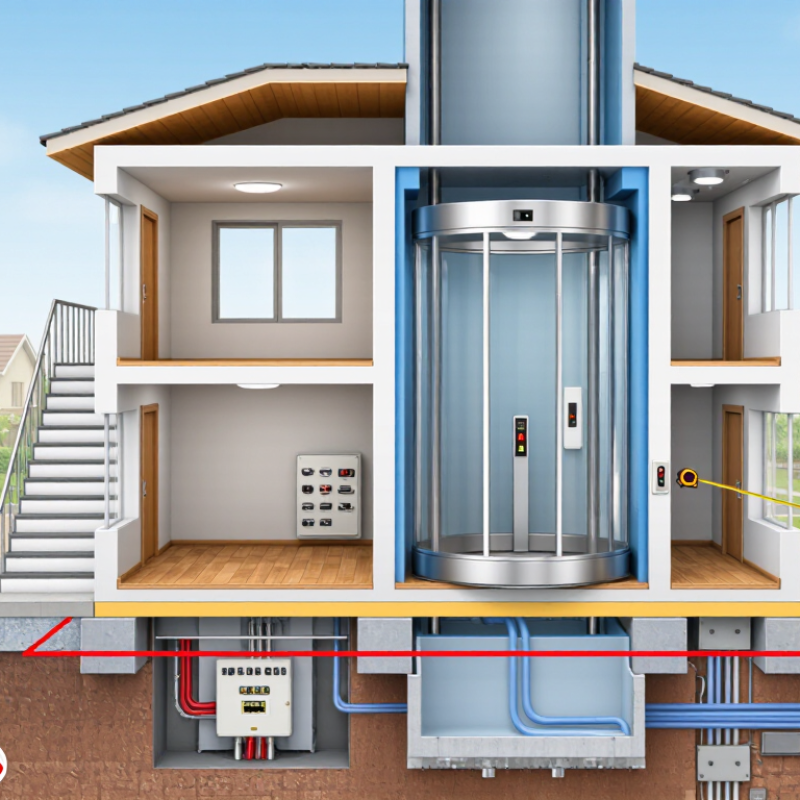
What Are the 2026 Building Codes for Residential Elevators?

2026 Code Framework: Local Adoption of ASME A17.1/CSA B44 §5.3

In 2026, residential elevator requirements depend on where the home is located. There is no single code adopted everywhere. Many jurisdictions use ASME A17.1/CSA B44, but they may adopt different editions or add local amendments. The authority having jurisdiction determines which rules apply to a project.

Section 5.3 addresses private residence elevators. It sets safety requirements for equipment and installation, including items such as the hoistway, doors, clearances, and controls. Details matter: a landing-door interlock, for example, helps prevent travel when a door is not properly secured. Still, a code reference alone cannot confirm compliance. Local officials may also require permits, plan review, inspections, or coordination with building and electrical rules. That sounds tidy; real projects can be less tidy.

Before choosing equipment or changing a home, ask the local elevator or building department which edition and amendments it enforces. Share the proposed layout, number of stops, and installation type. Ask whether the work needs inspection before walls are closed. Requirements can differ even between nearby communities, and older installations may follow separate rules. Verify locally.

ASME §5.3 Design Limits: 950 lb, 40 ft/min, 50 ft Travel, 15 ft²

For 2026 planning, ASME A17.1/CSA B44 Section 5.3 sets key limits for qualifying private-residence elevators: 950 pounds rated load 40 feet per minute 50 feet of travel 15 square feet of car area. These are maximum design limits, not recommended targets. A larger car or longer travel may require a different elevator classification. Requirements also depend on the code edition adopted locally, so confirm the applicable rules with the authority having jurisdiction before finalizing plans.

These figures shape real layouts. A 15-square-foot car can feel tight when a wheelchair, caregiver, and shopping bags arrive together. Rated load matters, too; account for occupants and carried items rather than estimating by appearance. The AARP 2024 Home and Community Preferences Survey reports that 75% of adults aged 50 and older want to remain in their homes as they age. That preference makes usable clearances and dependable access practical design concerns, not just checklist items. Still, a compliant drawing may not feel comfortable in daily use.

Tips: Measure the intended mobility device, doorway clear width, and landing approach before selecting a car size. Keep the 950-pound limit visible in planning documents, and ask the elevator professional to verify the selected ASME edition and local amendments. Small details get missed. Check them twice.

Hoistway and Landing Safeguards: Door Locks, Gates, and Clearances

For 2026, residential elevator requirements depend on the codes adopted and amended by the local jurisdiction. Confirm the applicable rules with the building department before construction or renovation. Small details matter. A landing door should remain closed and secured unless the elevator is properly positioned at that floor. Its interlock helps prevent travel when the door is open or not fully latched. The elevator’s car gate serves a different purpose: it helps contain passengers inside the car. Both safeguards must work together, not merely look secure.

Clearances around the hoistway, landing doors, and car gate should match the approved plans and equipment specifications. There is no single safe dimension for every installation. A narrow gap can create a pinch point; an oversized opening may expose a person to moving parts. Check that doors swing freely, latches engage without force, and thresholds do not leave abrupt gaps. During inspection, operate each door and gate through a full cycle. Listen for scraping, and watch for uneven movement. These checks are useful, but they do not replace a qualified inspection. Even a tidy installation can hide a misaligned interlock, so document adjustments and verify the final setup against local requirements.

What Are the 2026 Building Codes for Residential Elevators?

Hoistway and Landing Safeguards: Door Locks, Gates, and Clearances

How to read this chart: A value of 1 means the item is a safeguard topic addressed by applicable residential elevator safety standards; it is not a dimension or a percentage. Requirements and permitted clearances depend on the code edition adopted by the local authority and the elevator’s design. Confirm the applicable rules with your local building department and elevator inspector.

Electrical and Emergency Provisions: NEC Compliance and Backup Lowering

For a residential elevator in 2026, electrical requirements depend on the codes adopted by your state or local authority. The National Electrical Code (NEC) may apply to branch circuits, disconnects, grounding, and wiring methods, but the adopted edition and local amendments can differ. Confirm requirements with the building department and a qualified elevator contractor before work begins. A neat-looking installation is not proof of compliance.

Emergency lowering deserves equal attention. If utility power fails, some systems use stored battery power to move the car to a landing and release the doors. The procedure and required equipment depend on the elevator design and applicable rules. Test the backup function as directed by the manufacturer, and make sure household members know how to call for help. A quiet test is easy to overlook. Keep service records and note any warning lights or delayed movement for inspection.

Tips: Ask who supplies and verifies the emergency power source. Keep the disconnect accessible, clearly identified, and unobstructed. Test only as the service instructions allow; never enter a shaft or try to move the car manually. Even careful homeowners can miss a detail, so have a licensed professional review the installation and explain its limits.

Permits and Inspections: Confirm the Adopted Code Edition and Tests

Before ordering a residential elevator, ask the building department which code edition it has adopted for your permit. Residential installations commonly reference ASME A17.1/CSA B44, but local amendments and adoption dates can change the requirements. Get the answer in writing. A plan set should identify the applicable edition and show the shaft, pit, clearances, electrical supply, and emergency access. One detail is easy to miss: a state code edition may differ from the edition your local authority currently enforces.

Confirm inspection stages before construction begins. Ask who schedules the acceptance inspection and which tests are required under the adopted code. These may include checks of door interlocks, emergency operation, controls, and other safety devices; the authority having jurisdiction determines the applicable scope. Keep approved plans, equipment records, and test results together for the inspector. Small discrepancies matter. The U.S. Bureau of Labor Statistics projects 6% employment growth for elevator installers and repairers from 2023 to 2033, a useful reminder to arrange qualified technical support early. That workforce projection is not a code requirement. I would still confirm the inspection checklist directly with the local official, since a general checklist can miss local amendments.

What Are the 2026 Building Codes for Residential Elevators? — Permits and Inspections: Confirm the Adopted Code Edition and Tests
Review area What to confirm for a residential elevator Permit or inspection evidence
Locally adopted code edition There is no single nationwide “2026 residential elevator code.” Ask the local authority having jurisdiction (AHJ) which building, elevator, electrical, and fire codes—and which editions or local amendments—are in force at the project address. Written confirmation from the building department or elevator-safety authority; verify whether the permit is reviewed under a state or local code rather than assuming the newest model-code edition applies.
Elevator safety standard Confirm the edition of ASME A17.1/CSA B44, Safety Code for Elevators and Escalators adopted by the jurisdiction, including the applicable private-residence elevator provisions. Permit documents identify the governing standard and edition. The AHJ determines applicable requirements and whether any approved alternative or variance applies.
Building-code coordination Check the adopted residential or building code for the elevator shaft or hoistway, openings, structural support, fire and smoke protection, required clearances, and any applicable emergency-access provisions. Requirements depend on the building and local amendments. Construction drawings, structural details, and any required fire-resistance documentation; inspection of the hoistway and related construction before it is concealed.
Electrical permit Confirm the locally adopted electrical code and requirements for the elevator power supply, disconnecting means, wiring, grounding, and any required lighting or receptacles. The National Electrical Code is published as NFPA 70, but the locally adopted edition controls. Electrical permit and inspection records, panel and disconnect details, and verification that the installation matches approved plans and the elevator manufacturer’s instructions.
Permit scope and responsible parties Ask whether separate building, electrical, and elevator permits are required, who may apply, and whether licensed elevator personnel are required for installation or testing in that jurisdiction. Approved permit applications, plan review comments, contractor qualifications where required, and any required inspection scheduling or fees.
Hoistway, pit, and overhead Verify dimensions, clearances, pit and overhead conditions, access, guarding, and protection from water or other hazards against the approved design and the adopted elevator standard. Field measurements and rough-in inspection before walls, shaft finishes, or other work conceal the installation.
Landing doors and car gate Confirm that doors, gates, interlocks, and related safety devices meet the applicable standard and are arranged so the elevator cannot operate unsafely with an access door or gate in an improper condition. Inspector or qualified testing personnel verify operation and safety-device functions during the required inspection and acceptance testing.
Acceptance inspection and tests Before use, confirm which acceptance inspections and tests are required for the elevator type and adopted code edition. The test scope is not identical for every installation and should be set by the AHJ and applicable standard. Completed test records and inspection reports, including the tests applicable to the equipment and installation; obtain written approval or an operating certificate if required locally.
Emergency and safety functions Determine which required emergency operation, alarm or communication, door-reopening, stopping, and other safety functions apply to the specific elevator and adopted edition. Functional checks documented by the qualified tester or inspector, plus user instructions and emergency contact information where required.
Final approval and ongoing inspections Do not assume a building final inspection alone authorizes elevator operation. Ask whether the elevator authority requires a separate final inspection, registration, certificate, or periodic inspections and tests. Keep the signed inspection report, permit closeout, operating approval or certificate if issued, test documentation, and records of future inspections and maintenance.

Important: Model codes and standards do not become local law automatically. The controlling requirements are the codes and editions adopted by the AHJ for the project, including local amendments. Confirm them before design, purchase, or construction.

FAQS

Which electrical rules apply to a residential elevator?

Requirements depend on the codes adopted by your state or local authority. They may cover circuits, disconnects, grounding, and wiring. Confirm the rules with the building department and a qualified elevator contractor.

How can I confirm the correct code edition?

Ask the local building department before ordering or starting construction. Request the adopted edition in writing. Local amendments can make a general checklist incomplete.

What should the elevator plans show?

Plans should identify the applicable code edition and show the shaft, pit, clearances, electrical supply, and emergency access. A small missing measurement can cause delays.

What happens if household power fails?

Some systems use stored battery power to move the car to a landing and release the doors. The procedure depends on the elevator’s design. Keep household members informed about how to call for help.

How should emergency lowering be tested?

Follow the service instructions and have a qualified professional explain the test. Never enter the shaft or try to move the car manually. A quiet test is easy to overlook.

What should I check on the electrical disconnect?

Keep it accessible, clearly identified, and free of stored items. A tidy installation alone does not prove code compliance.

Which inspections and tests may be required?

The local authority determines the inspection scope. Tests may check door interlocks, emergency operation, controls, and other safety devices. Confirm who schedules the acceptance inspection.

What records should I keep for inspection?

Keep approved plans, equipment records, and test results together. Note warning lights or delayed movement, and arrange a professional review. I might still miss a detail.

Conclusion

Residential elevator requirements in 2026 depend on the codes adopted by the local jurisdiction, so homeowners should confirm which edition of ASME A17.1/CSA B44 applies before planning a project. In jurisdictions using Section 5.3 for private residence elevators, key design limits may include a 950-pound capacity, a maximum speed of 40 feet per minute, up to 50 feet of travel, and a platform area no greater than 15 square feet. These limits help determine whether a proposed elevator fits the residential category.

A compliant installation also needs appropriate hoistway and landing safeguards, including interlocked doors or gates and required clearances. Electrical work must meet applicable NEC provisions, and emergency lowering arrangements may be required so occupants can reach a landing during a power outage. Because local amendments and interpretations can vary, verify permit requirements, the adopted code edition, and required inspections and tests with the local authority before construction or installation.

Isabella

Isabella

Isabella is a dedicated marketing professional with a sharp focus on driving brand growth and engagement through strategic content creation. With an extensive background in digital marketing, she combines her passion for storytelling with her keen understanding of industry trends to deliver......