Selecting a home lift is a significant decision for homeowners. One crucial factor is understanding what are the electricity requirements for a home lift. This requires careful consideration of the lift's specifications and your home's current electrical system.
Home lifts are not just a luxury; they enhance accessibility and mobility. However, they demand a specific amount of electricity to function efficiently. Each model has unique energy needs, and it’s essential to evaluate these before installation.
Consulting with professionals can help navigate this process. It's also vital to review local regulations and contractor guidelines. Ultimately, ensuring that your home’s electrical system aligns with the lift's requirements is key. A well-planned installation can prevent future complications and ensure safety. Adequate preparation promotes a seamless integration of the lift into your home.
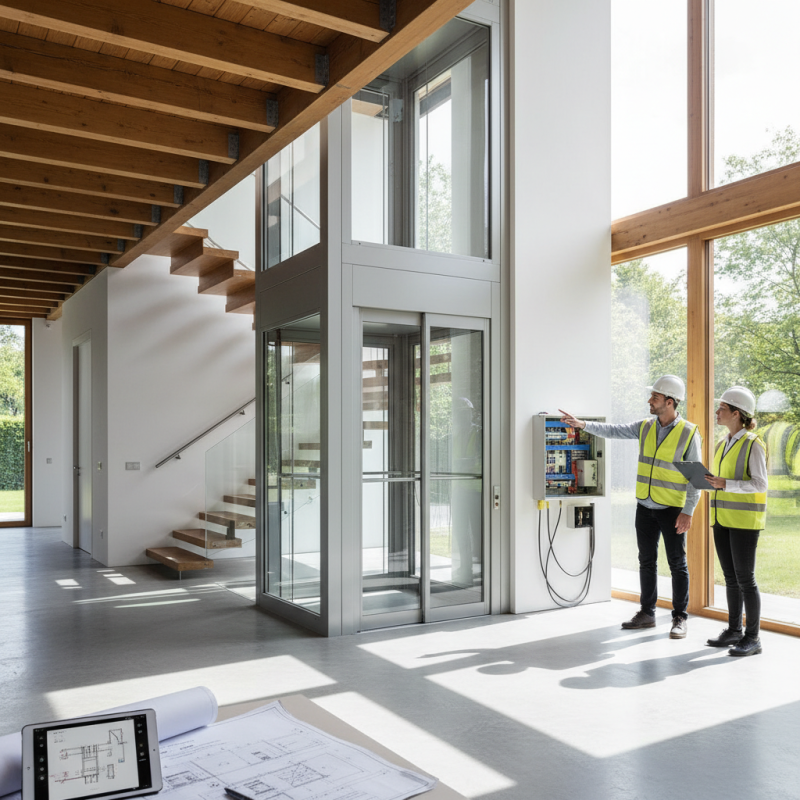
Determining the electricity requirements for a home lift involves understanding its consumption patterns. Home lifts typically operate on standard household voltage. However, energy needs vary based on the lift's design and size. Most residential lifts use between 1.5 to 4 kilowatts. It's important to analyze your specific lift model for accurate estimates.
Tips: Always consult with an experienced installer. They can provide valuable insights on your home’s electrical capacity. Check the power supply in your area too. A power outage can affect lift performance. Ensure that your home can handle this extra load before installation.
Consider the duration of use. Frequent use demands more electricity. Additionally, think about the weight capacity of the lift. Heavier lifts require more energy. Proper maintenance can enhance efficiency. Ignoring regular checks may lead to higher electricity bills. Lift size and design aspects should not be overlooked. Each factor plays a role in your overall energy consumption.
When installing a home lift, understanding the electricity requirements is crucial. Several key factors influence these needs. The lift's weight capacity plays a significant role. Larger lifts that carry more weight will typically require more power. For example, a small, two-person lift may need around 1,000 watts, while a larger one for heavier loads could demand up to 3,000 watts.
The height the lift travels affects electrical needs as well. A lift designed to travel several floors requires a more powerful motor. This increase in power consumption is essential for smooth operation. Additionally, consider usage frequency. Daily use lifts may need constant energy more than those used occasionally. Energy-efficient models are available, but even they must be assessed for specific household needs.
Don't overlook the electrical system of your home. Older homes might have outdated wiring that cannot support modern lifts. Upgrades may be necessary to ensure safety and efficiency. Consulting a professional can help clarify these complexities. It's vital to balance functionality with energy conservation when determining requirements.
When planning a home lift, understanding the power requirements is crucial. The motor size and load capacity significantly influence overall energy needs. For instance, a typical residential lift requires a motor ranging from 1.5 to 5 horsepower, depending on the weight it needs to support. A standard passenger lift with a load capacity of 750 pounds might need a 3-horsepower motor for smooth operation.
Calculating electrical needs goes beyond merely considering motor size. The lift’s design, operational frequency, and the total weight it accommodates also play vital roles. Engineers suggest that the power consumption might increase by 20-30% for lifts that operate frequently or carry heavier loads. For smaller homes, a lift might only require 1.5 kW, while larger, more frequent-use systems could demand 5 kW or more.
It’s important to note that incorrect calculations can lead to over or under-sizing of motors, impacting performance and longevity. Data from various industry reports indicate that improper motor sizing can reduce efficiency by up to 15%. Homeowners should consult with professionals to assess their unique requirements.
When planning a home lift system, understanding electricity requirements is crucial. Voltage and phase requirements can vary significantly depending on the lift’s design and purpose. Most residential lifts operate on standard voltages, either 120V or 240V. For example, according to the National Elevator Industry, Inc., lifts typically require a dedicated circuit to ensure safety and efficiency.
Single-phase power is common for residential setups. However, some lifts may benefit from three-phase power. This power type offers better efficiency and smoother operation, especially in larger or heavier models. A study by the Elevator Research Institute found that three-phase lifts can reduce energy consumption by up to 20%. A professional consultation can clarify which option best suits your needs.
Assessing your property’s electrical system is also essential. Many homes may not have adequate infrastructure ready for a lift installation. Upgrading may involve additional costs. The National Electrical Code provides guidelines on electrical requirements for lifts, emphasizing the need for licensed electricians. This ensures compliance and optimal performance, reflecting the importance of professional oversight in your planning.
| Lift Type | Voltage Requirement (V) | Phase Requirement | Power Consumption (kW) | Current (A) |
|---|---|---|---|---|
| Hydraulic Lift | 240 | Single-phase | 3.0 | 12.5 |
| Electric Lift | 400 | Three-phase | 5.5 | 8.0 |
| Vacuum Lift | 220 | Single-phase | 2.0 | 9.1 |
| Cable-Driven Lift | 380 | Three-phase | 7.5 | 12.5 |
When evaluating energy efficiency standards for residential lifts, it's essential to understand their impact on electricity requirements. According to the American Society of Mechanical Engineers (ASME), lifts installed in homes should comply with stringent energy efficiency standards. These standards often require monitoring the lift's energy consumption. Residential lifts can consume between 1,500 to 5,000 watts, depending on their design and usage. Understanding your lift's energy profile is vital.
Investing in energy-efficient lifts can significantly reduce electricity costs. A study by the Energy Information Administration (EIA) found that energy-efficient lifts can save homeowners an average of 20% on energy bills. It's worth exploring lifts with regenerative drives. These systems reclaim energy, allowing lifts to operate more sustainably.
**Tips:** Consider scheduling regular maintenance. Keeping your lift well-maintained ensures optimal energy efficiency. Always consult with a qualified professional when selecting a lift. A knowledgeable expert can recommend the best options tailored to your specific needs. Monitoring your lift's usage pattern also helps identify energy-wasting habits. This reflective practice can lead to smarter energy consumption.
: Key factors include weight capacity, travel height, usage frequency, and the home’s electrical system.
Larger lifts with higher weight capacities typically demand more power, up to 3,000 watts for heavier loads.
Common motor sizes range from 1.5 to 5 horsepower, depending on the lift's load capacity.
Incorrect sizing can reduce efficiency by up to 15%, impacting performance and longevity.
Energy-efficient lifts may lower bills by an average of 20% according to industry studies.
Compliance requires lifts to meet strict standards, often monitoring their energy consumption.
Regular maintenance ensures optimal energy efficiency and helps identify energy-wasting habits.
Yes, older homes may need wiring upgrades to support modern lift requirements safely.
It is a system that recaptures energy, allowing for more sustainable lift operation.
Homeowners should consult professionals to evaluate needs based on specific lift design and usage.
When considering the installation of a home lift, it is essential to understand what the electricity requirements for a home lift are. This involves examining the basics of electricity consumption associated with lift systems, including the key factors that influence electrical needs such as motor size and load capacity. These elements directly affect the overall power requirements of the lift.
Additionally, it is crucial to assess the voltage and phase requirements specific to residential elevator systems, as well as to evaluate energy efficiency standards and compliance with regulations. By carefully calculating and understanding these components, homeowners can ensure that their lift systems operate efficiently and safely while meeting all necessary electrical specifications.

Keg Lift